Paver patio ideas come down to three choices that work together: the laying pattern, the design and shape, and the color and material. Get those right and you have a patio that elevates the whole property. Below are sixteen ideas across patterns, layouts, and finishes, plus how to choose the combination that fits your home. One thing stays constant through all of them: the base beneath the pavers matters more than any design detail on top.
A paver patio is the most popular and versatile hardscape surface for a reason. It resists cracking, can be repaired one unit at a time, and offers more design flexibility than any poured surface.
Paver Pattern Ideas
The laying pattern sets the entire personality of the patio.
Running bond. The simplest and most classic pattern, with pavers offset row to row like brickwork. It is clean, timeless, and efficient with material.
Herringbone. Pavers set at a 45 or 90 degree zigzag. Herringbone is both striking and structurally strong, which is why it is a favorite for driveways as well as patios.
Basketweave. Pairs of pavers alternating direction to create a woven look. It reads as traditional and adds visual texture.
Pinwheel. Smaller pavers set around a larger center paver in a rotating pattern, creating repeating focal points across the surface.
Ashlar. A mix of paver sizes set in a repeating pattern that mimics cut natural stone, ideal for a high-end, organic look.
Paver Patio Design and Layout Ideas
Beyond the pattern, the shape and structure of the patio create its impact.
A contrasting border. Framing the patio with a band of pavers in a different color or laid in a different direction defines the space and gives it a finished, intentional edge.
Banding and inlays. Running a contrasting band through the field, or setting a decorative inlay, breaks up a large patio and adds custom detail.
Multi-level patios. Stepping the patio into two or more levels separates zones, such as dining and lounging, and adds dimension to a flat yard.
Curved edges. Soft, curved borders relax the geometry and pair well with planting beds and natural landscapes.
A patio with a built-in fire feature. Designing the patio around an outdoor fireplace or fire pit creates a natural gathering point and a clear focal point.
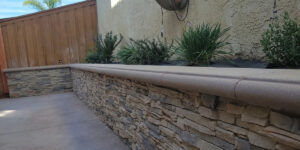
An integrated seat wall. A low wall around part of the patio adds seating and definition without taking up floor space.
Color and Material Ideas
The material and color tie the patio to your home and landscape.
Blended earth tones. Multi-tone pavers in tans, browns, and grays read as natural and hide wear well over time.
Pavers that mimic natural stone. Premium concrete pavers replicate the look of travertine, flagstone, or slate at a more accessible price, giving you a high-end appearance with the durability of pavers.
Travertine and natural stone. For a true stone patio, travertine stays cooler underfoot and suits both Mediterranean and modern homes common across Southern California.
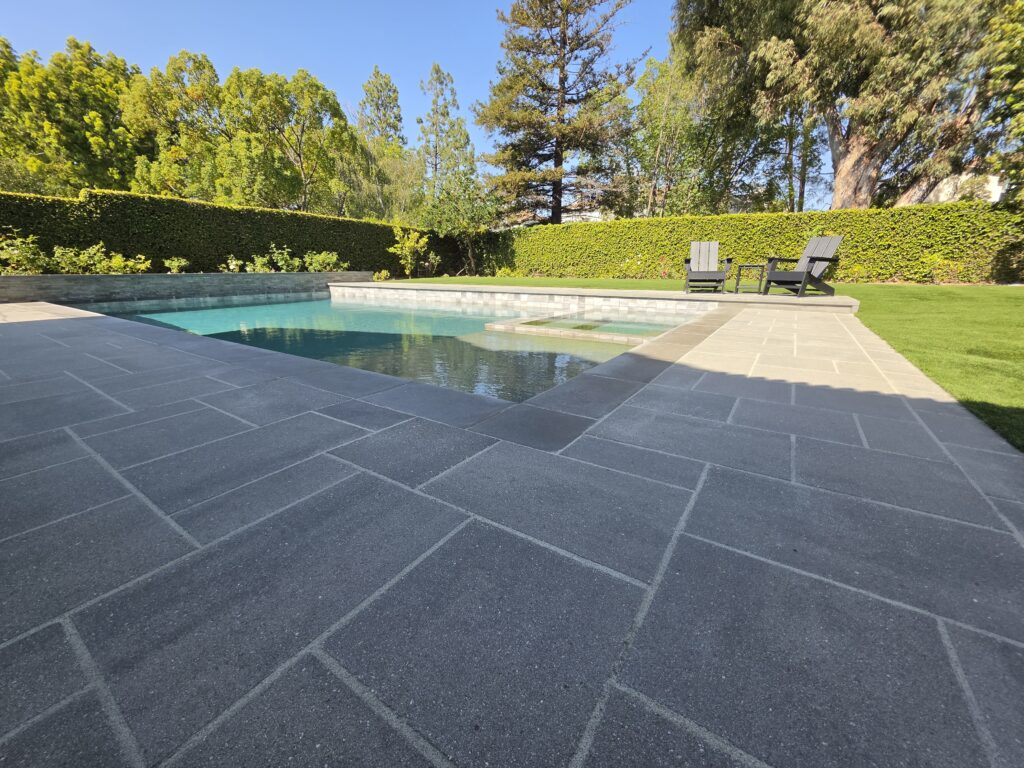
Bold contrast. Pairing a light field with a dark charcoal border, or vice versa, creates a crisp, modern statement.
Porcelain pavers. For a sleek, low-maintenance modern look, porcelain resists fading and staining and works well in contemporary designs.
Ideas for Specific Spaces
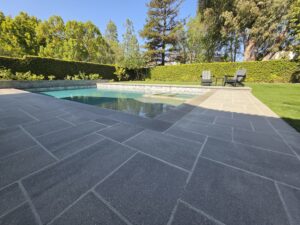
A poolside paver deck. Slip-resistant pavers around a pool stay cooler underfoot and handle splash and movement better than a poured slab.
A wraparound patio. Pavers that flow from the back patio around the side of the house connect the outdoor spaces into one usable area.
How to Choose Your Paver Patio Design
Start with the architecture of your home and the feel you want, then let that guide the pattern, color, and shape. A traditional home often suits running bond or basketweave in warm tones, while a modern home pairs well with large-format pavers, clean borders, and bold contrast. Consider how the patio connects to the rest of the yard, including walkways, the house, and any planting beds, so the design reads as one cohesive space.
Whatever design you choose, the foundation determines how long it lasts. A proper compacted base, edge restraints, and polymeric sand joints are what keep a patio level and weed-free for decades. You can read more about what a project costs in our guide to paver patio cost, and how pavers compare to a poured surface in pavers vs. stamped concrete.
Frequently Asked Questions
What is the most popular paver patio pattern?
Running bond and herringbone are the two most popular patterns. Running bond is clean and classic, while herringbone is more visually striking and structurally strong, which is why it is also common on driveways.
How do I make a small paver patio look bigger?
Use larger-format pavers and a simple pattern to reduce visual clutter, and add a contrasting border to define the space cleanly. Running the pattern diagonally can also make a small patio feel larger.
What is the best paver color for a patio?
Blended earth tones are a safe, popular choice because they look natural and hide wear well. The best color ultimately depends on your home’s exterior and the look you want, from warm and traditional to bold and modern.
Should a paver patio have a border?
A border is not required, but it adds a finished, intentional edge and helps define the space. Many of the best-looking patios use a contrasting border or band to frame the design.
How long does a paver patio last?
A properly installed paver patio can last 25 to 50 years or more. Longevity depends far more on the quality of the base and installation than on the pavers or pattern you choose.
Final Thoughts
The best paver patio idea is the combination of pattern, design, and material that fits your home and how you want to use the space. Whether you lean toward a classic herringbone in earth tones or a modern large-format design with a bold border, the design sets the look and the base sets the lifespan. Clean Concepts Landscape & Hardscape designs and installs paver patios across Moorpark and the Conejo Valley. Call (805) 279-7690 or request a free on-site estimate to bring your design to life.