Retaining wall ideas fall into two camps: walls that solve a problem, like a slope, erosion, or a grade change, and walls that shape and beautify a yard, like seat walls, planters, and terraces. The best designs do both at once. Below are fifteen ideas across materials, layouts, and finishes, along with the one factor that determines whether any of them last: drainage.
For homes across hillier areas, a retaining wall is often the difference between a steep, unusable slope and a flat, finished space you can actually enjoy.
Structural and Slope Retaining Wall Ideas
These ideas reclaim difficult ground and turn it into something usable.
Terraced walls. Instead of one tall wall, a series of stepped walls breaks a steep slope into multiple level tiers. Terracing is one of the most effective ways to make a hillside usable, and each level can hold a patio, lawn, or garden bed.
A single low retaining wall to level a yard. Where the grade change is modest, one well-built wall can carve out a flat, usable area from a gently sloped lot.
Walls that control erosion. On properties where winter runoff washes soil downhill, a retaining wall paired with proper drainage holds the slope in place and protects everything below it.
Walls that protect a foundation. Positioned correctly, a retaining wall directs soil and water away from the house, protecting the foundation from pressure and moisture.
Decorative and Garden Wall Ideas
Not every wall is about holding back a hillside. Lower walls add structure and beauty to flat yards too.
Built-in seat walls. A low wall around a patio or fire feature doubles as seating, adding function and defining the space without crowding it.
Garden and planter walls. A short retaining wall can frame a raised planting bed, lifting flowers and shrubs to eye level and giving the garden clean definition.
Curved walls. A gently curved wall softens a landscape and guides the eye, a nice contrast to the straight lines of the house.
Tiered planters. Stacked planter walls at different heights create a layered, cascading garden that adds depth to a flat yard.
Material and Finish Ideas
The material sets the entire character of the wall.
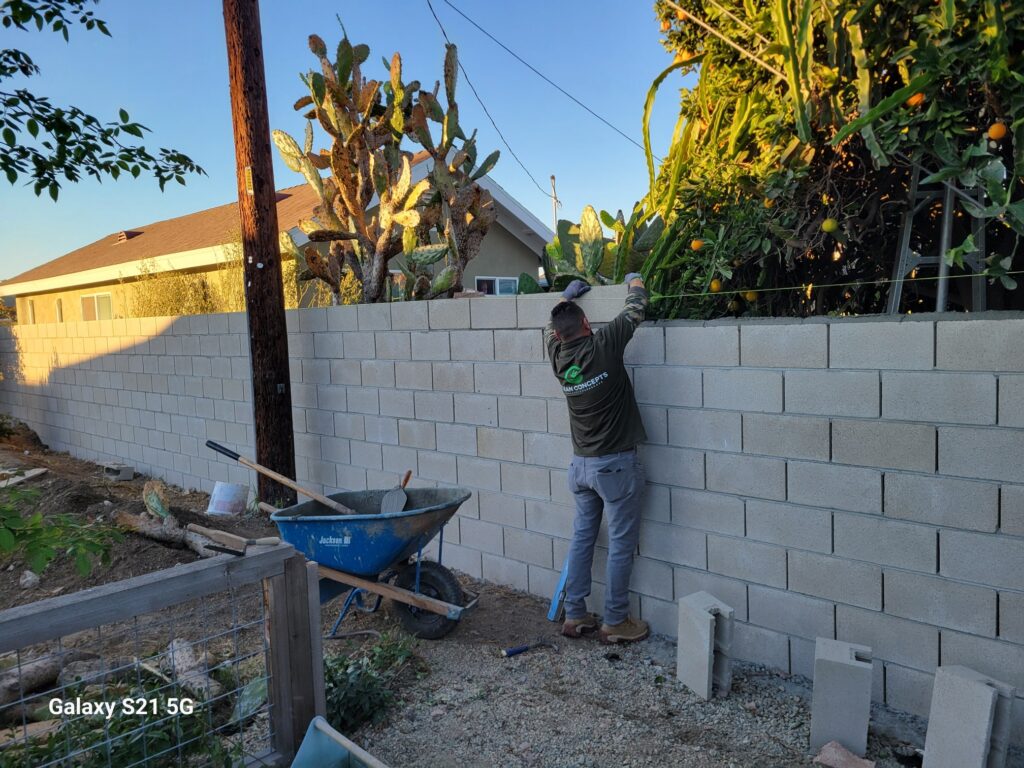
Segmental block. Interlocking concrete block is durable, flexible, and available in many colors and textures, which makes it the most versatile choice for most residential walls.
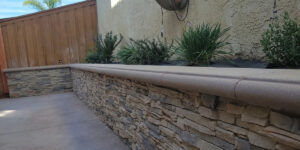
Natural stone. Stacked or veneer stone delivers a timeless, high-end look that suits upscale homes and blends into a natural landscape.
Stone veneer over block. A structural block wall faced with stone veneer combines the strength and value of block with the appearance of natural stone.
Board-formed or smooth concrete. For modern designs, a clean concrete wall offers a minimal, architectural look.
Ideas That Combine Walls With Other Features
The best walls rarely stand alone.
Walls with integrated steps. Building steps into a terraced design connects the levels and turns a slope into an inviting, walkable space.
Walls with landscape lighting. Adding low-voltage landscape lighting along a wall or into its cap highlights the texture after dark and improves safety on steps and paths.
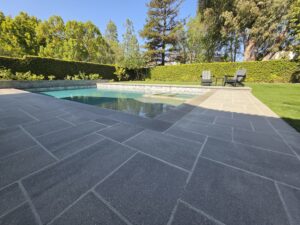
Walls paired with a patio. A seat wall that wraps a paver patio ties the hardscape together into one cohesive outdoor room.
The One Thing Every Retaining Wall Needs
No retaining wall idea works without proper drainage. A wall holds back not just soil but the water in that soil, and when water builds up behind it, the pressure can cause the wall to lean, crack, or fail. That is why a well-built wall includes gravel backfill, weep holes or a drain line, and the correct base and footing, with geogrid reinforcement on taller walls.
This is also why the material you choose matters less than the work behind it. A beautiful stone wall built without drainage will fail, while a simple block wall built correctly will stand for decades. For taller walls, typically those over four feet, engineering and a permit are usually required. You can read more about how we build them on our retaining walls page.
How to Choose the Right Retaining Wall
Start with the wall’s job. If it is holding back a significant slope, structure and drainage lead the decision, and the look follows. If it is a low garden or seat wall on flat ground, you have more freedom to choose material and shape for appearance. In either case, match the material and finish to your home’s architecture and the surrounding landscape so the wall reads as part of the design rather than an afterthought.
Frequently Asked Questions
How much does a retaining wall cost?
Cost depends on the wall’s height and length, the material, and the amount of drainage and reinforcement the site requires. Taller walls that need engineering cost more than low decorative walls. An on-site assessment gives the most accurate figure.
What is the best material for a retaining wall?
Segmental block is the most versatile and durable choice for most residential walls, while natural stone offers a premium look. The right material depends on the wall’s purpose, height, and the style of your home.
How do you make a sloped backyard usable?
Terraced retaining walls are the most effective solution. By breaking a steep slope into stepped, level tiers, they create usable space for patios, lawns, and gardens where there was none.
Why do retaining walls fail?
Most failures come from poor drainage. When water builds up behind a wall, the pressure causes it to lean, bulge, or collapse. Proper gravel backfill and drainage are what keep a wall standing.
Do retaining walls need a permit?
Lower decorative walls often do not, while taller walls, usually those over four feet, typically require engineering and a permit. A qualified contractor will advise you on what your project needs.
Final Thoughts
Whether you need to tame a slope or simply add structure and beauty to a flat yard, there is a retaining wall idea to fit. The key is to let the wall’s purpose guide the design, choose a material that suits your home, and never cut corners on the drainage and base that determine how long it lasts. Clean Concepts Landscape & Hardscape designs and builds retaining walls across Moorpark and the Conejo Valley. Call (805) 279-7690 or request a free on-site assessment to talk through the right wall for your yard.